PyCon Africa Is Coming to Kampala: Five Days of Python, People and Possibility
How PyCon Uganda Grew Into PyCon Africa 2026 🐍🌍

My name is Ronnie & a fellow geek like you😎. I am passionately tech curious.
I blog, tweet, write, code, vlog, discuss and eat anything about tech.
😍 Feel Free To Connect 😍
From helping organise Uganda's first PyCon in 2023 to watching the continental Python community come to Kampala in 2026, this journey feels worth documenting.
There is something interesting about looking at an old conference photo.
At the time, it is just a picture.
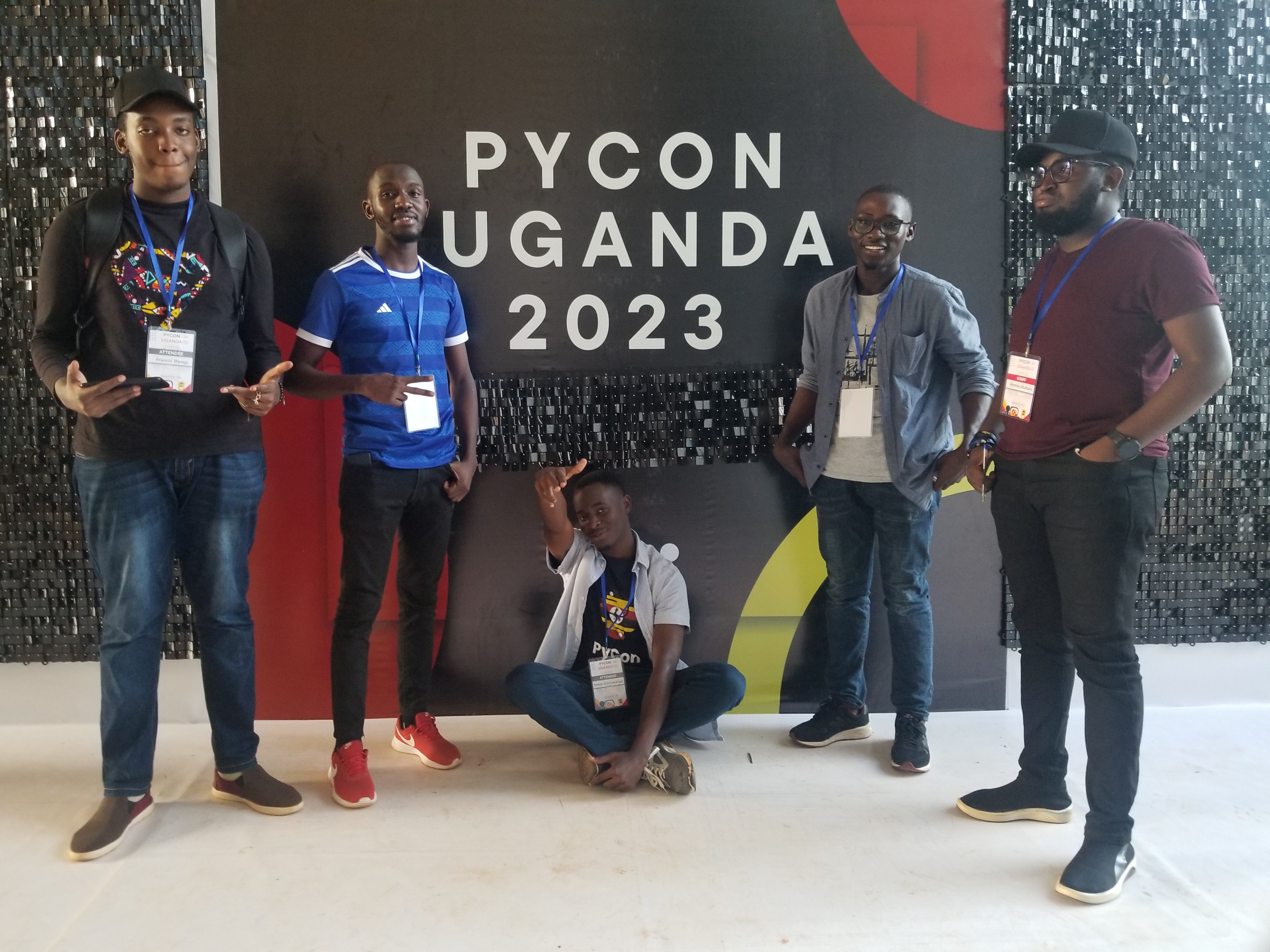
A couple of friends. Conference badges around our necks. Random poses. T-shirts. Laptops somewhere nearby. Probably considerably less sleep than any of us were willing to admit. 😄
Then a few years pass.
Suddenly, that photo becomes a timestamp.
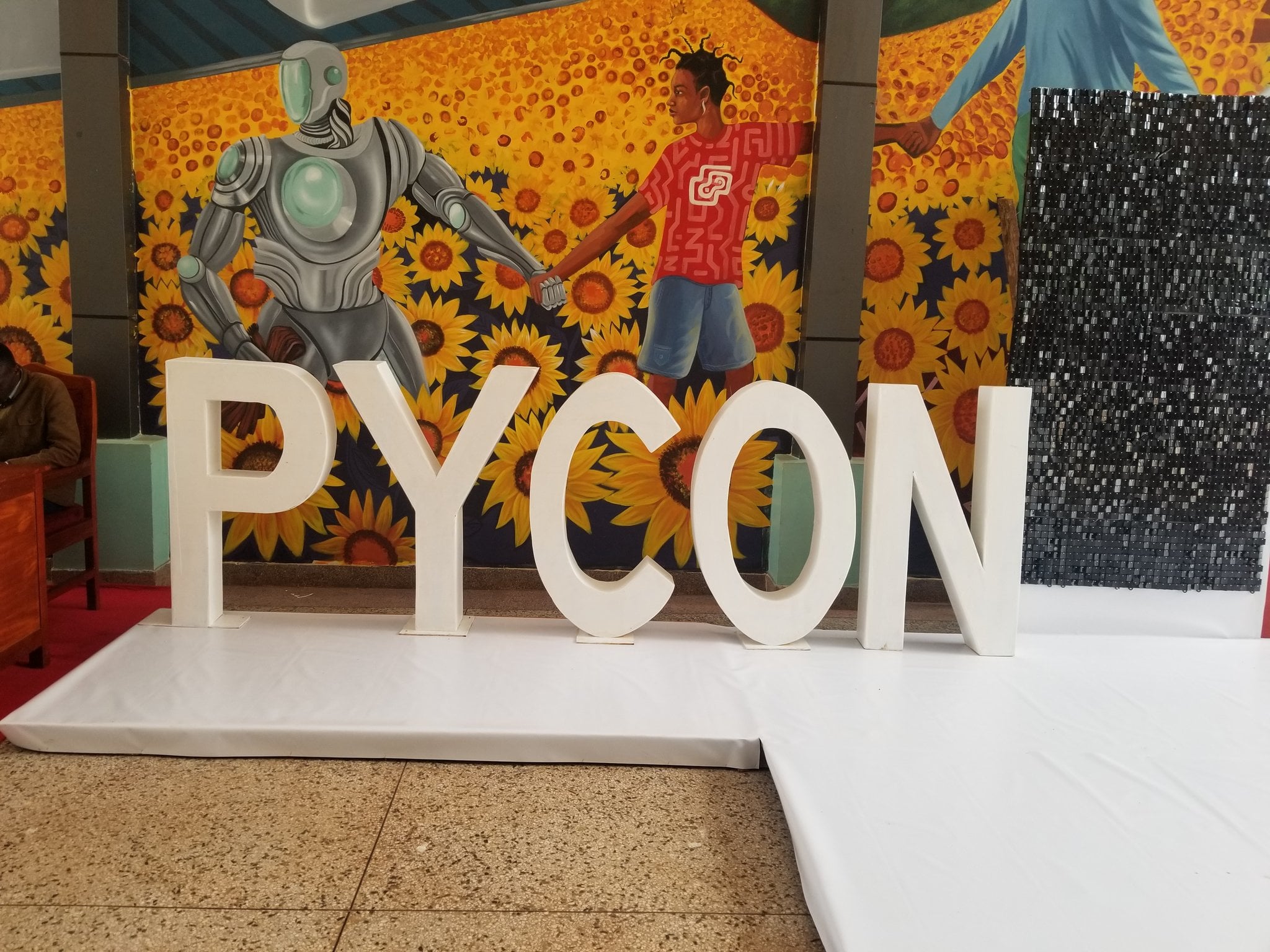
It reminds you where people were in their careers, which communities were just beginning, the conversations happening at the time, and how much has changed since.
That is what the photo that inspired this article is for me.
It was taken at PyCon Uganda 2023, the very first PyCon conference organised in Uganda...scroll down if you want to see the pic ):
But this story is bigger than my PyCon gang.
It is really a story about what has happened to Uganda's Python community since then, and why PyCon Africa coming to Kampala in October 2026 feels like such an important next chapter.
PyCon Africa itself is not new. The pan-African conference first gathered in Accra in 2019 and returned to Ghana for another five-day edition in 2024. Uganda hosting the 2026 edition therefore represents something slightly different from simply scaling up PyCon Uganda: Kampala is becoming the host city for an already established continental Python gathering
It Started in Nakawa in 2023
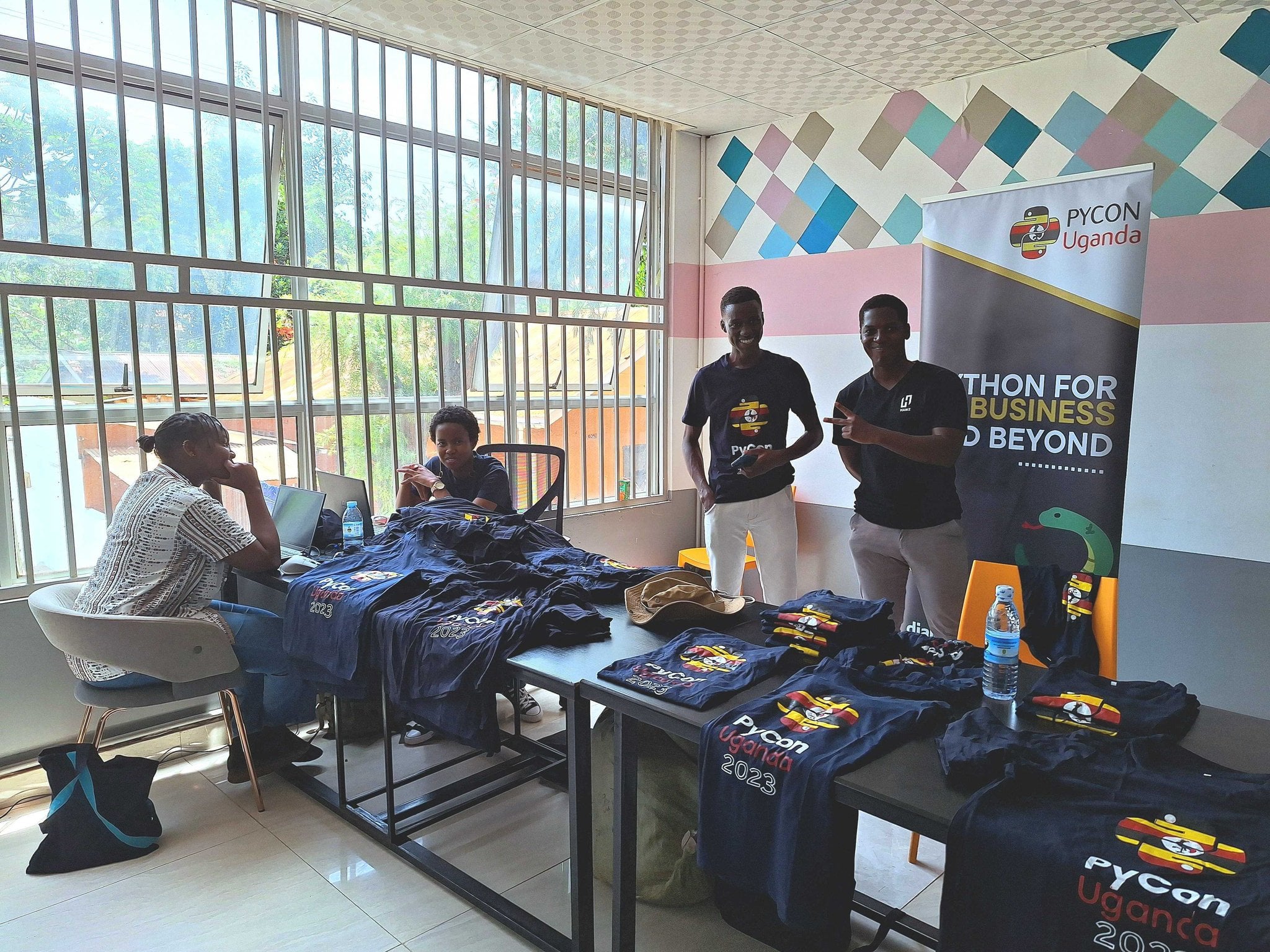
Uganda's inaugural PyCon took place from 21–23 September 2023 at the National ICT Innovation Hub in Nakawa, Kampala.
More than 150 people attended, supported by an organising team of over 20 people.
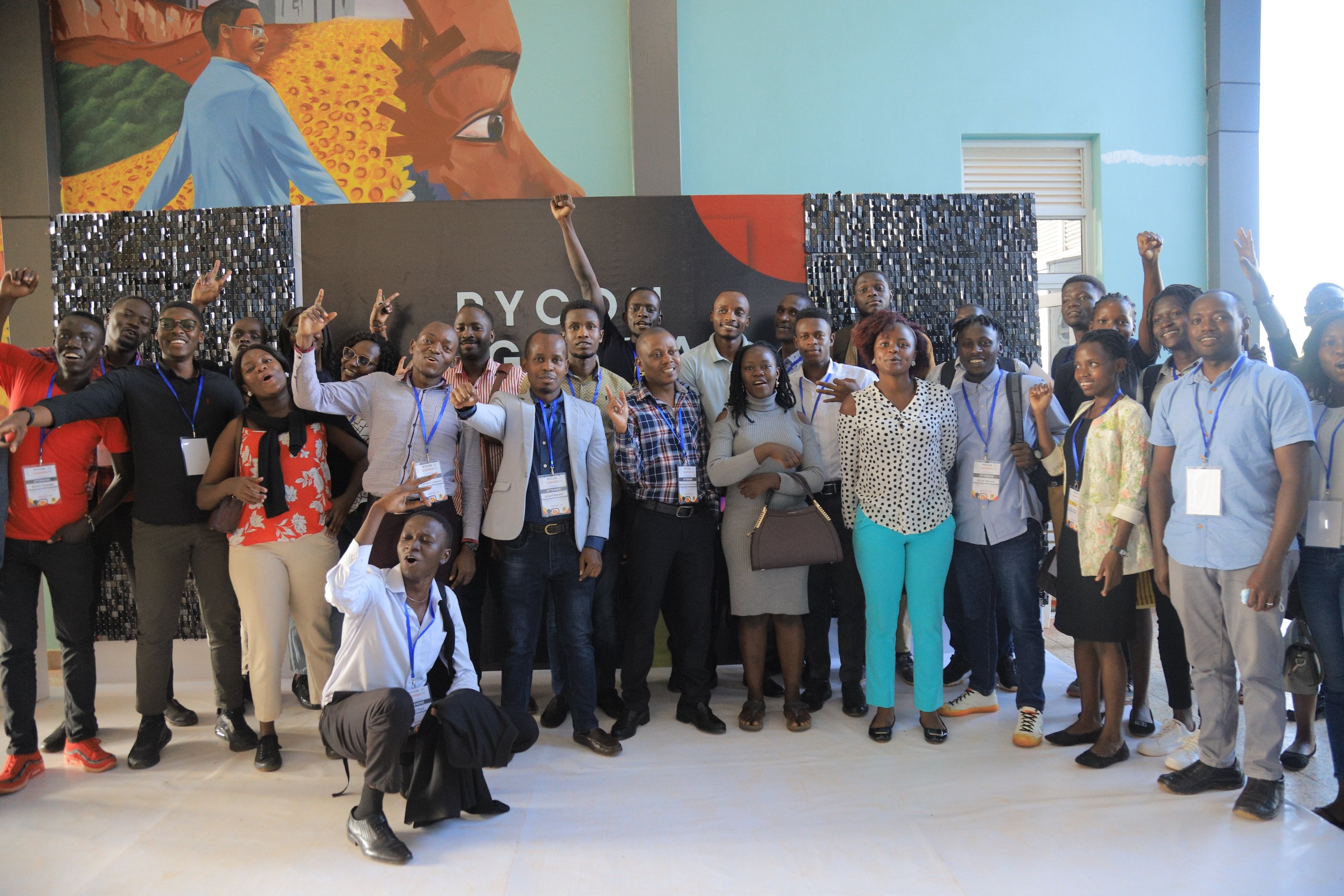
The programme stretched across three days and brought together conversations around Python, artificial intelligence, data science, web development, cloud technologies, open source and community building.
I was fortunate to be part of that very first & third core organising team.
My role was around communications, media and technology coverage.
That gave me an interesting view of the conference because I experienced it both as someone interested in the technology and as someone helping communicate the story of the event to a wider audience.
And conferences look very different from behind the scenes.
Before attendees walk through the doors, there are planning meetings, speakers to coordinate, graphics to design, posts to schedule, sponsors to engage, badges to prepare, venues to organise, emails to send and several last-minute problems that somehow only appear when the event is about to begin.
There is usually a point where everyone asks some version of:
"Are we actually ready?"
Then people arrive.
The rooms fill up.
Someone meets a future collaborator.
A student discovers an open-source community they did not know existed.
A developer hears an idea that changes how they think about a project.
And suddenly all that work behind the scenes becomes worth it.
That first PyCon Uganda felt like the beginning of something.
It turns out it was.
PyCon Uganda Did Not Stop There
One of the best parts of the story is that PyCon Uganda did not become a one-off event.
The community kept showing up.
New organisers joined.
New volunteers came in.
The venues changed.
More speakers participated.
The programme evolved.
And every year, there was another PyCon.
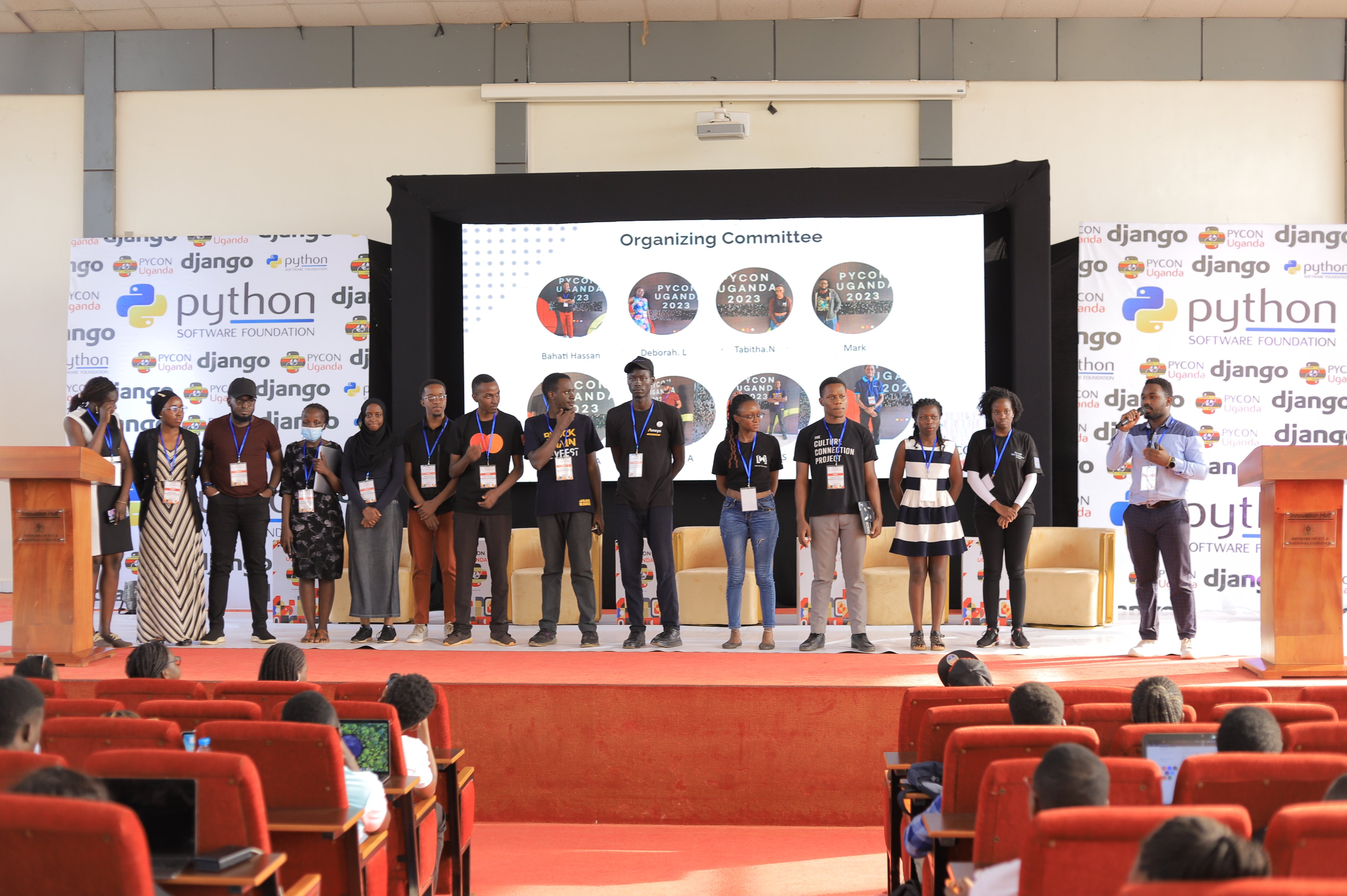
The journey so far
| Year | Edition | Venue | Highlights |
|---|---|---|---|
| 2023 | 1st PyCon Uganda | National ICT Innovation Hub, Nakawa | 150+ attendees, 20+ organisers, three days of Python and community |
| 2024 | 2nd PyCon Uganda | NWSC International Resource Center, Bugolobi | Five-day edition running from 9–13 October |
| 2025 | 3rd PyCon Uganda | Makerere University Ivory Tower | Three-day gathering of developers, students, researchers and community builders |
| 2026 | PyCon Africa | Speke Resort Munyonyo | Five days bringing together Python communities from across Africa |
2024: PyCon Uganda Moves to Bugolobi
The second edition of PyCon Uganda took place from 9–13 October 2024.
The venue was the NWSC International Resource Center in Bugolobi, along Old Port Bell Road.
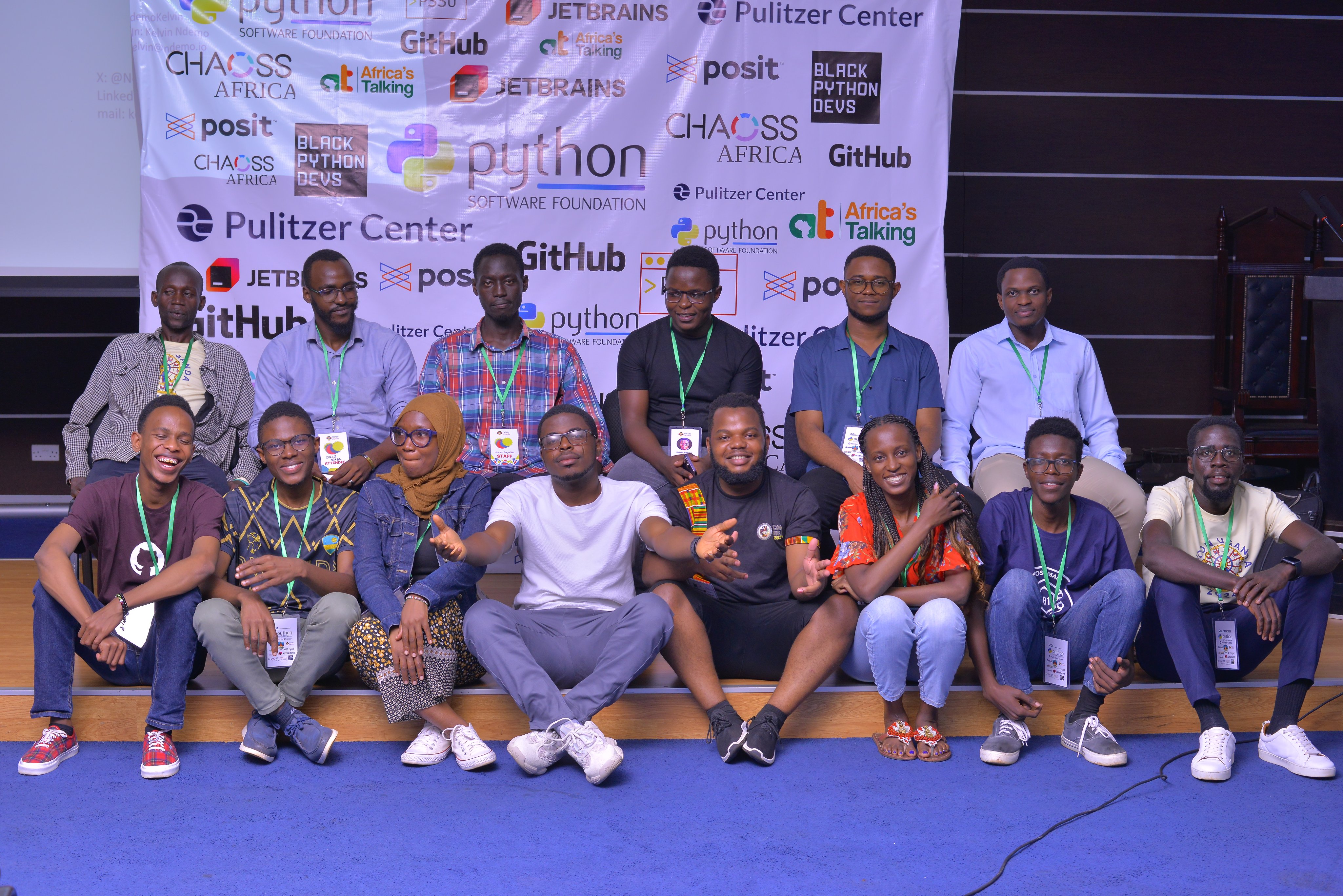
This was an important continuation of what had started in Nakawa.
The fact that a second edition happened at all mattered.
Developer communities are relatively easy to launch.
They are much harder to sustain.
A second conference meant the community was beginning to establish continuity.
Some People who had attended the first edition came back.
Others discovered PyCon Uganda for the first time.
And a yearly rhythm around the conference was beginning to form.
2025: PyCon Comes to Makerere
Then came the third edition.
PyCon Uganda 2025 ran from 7–9 August 2025 at Makerere University's Ivory Tower.
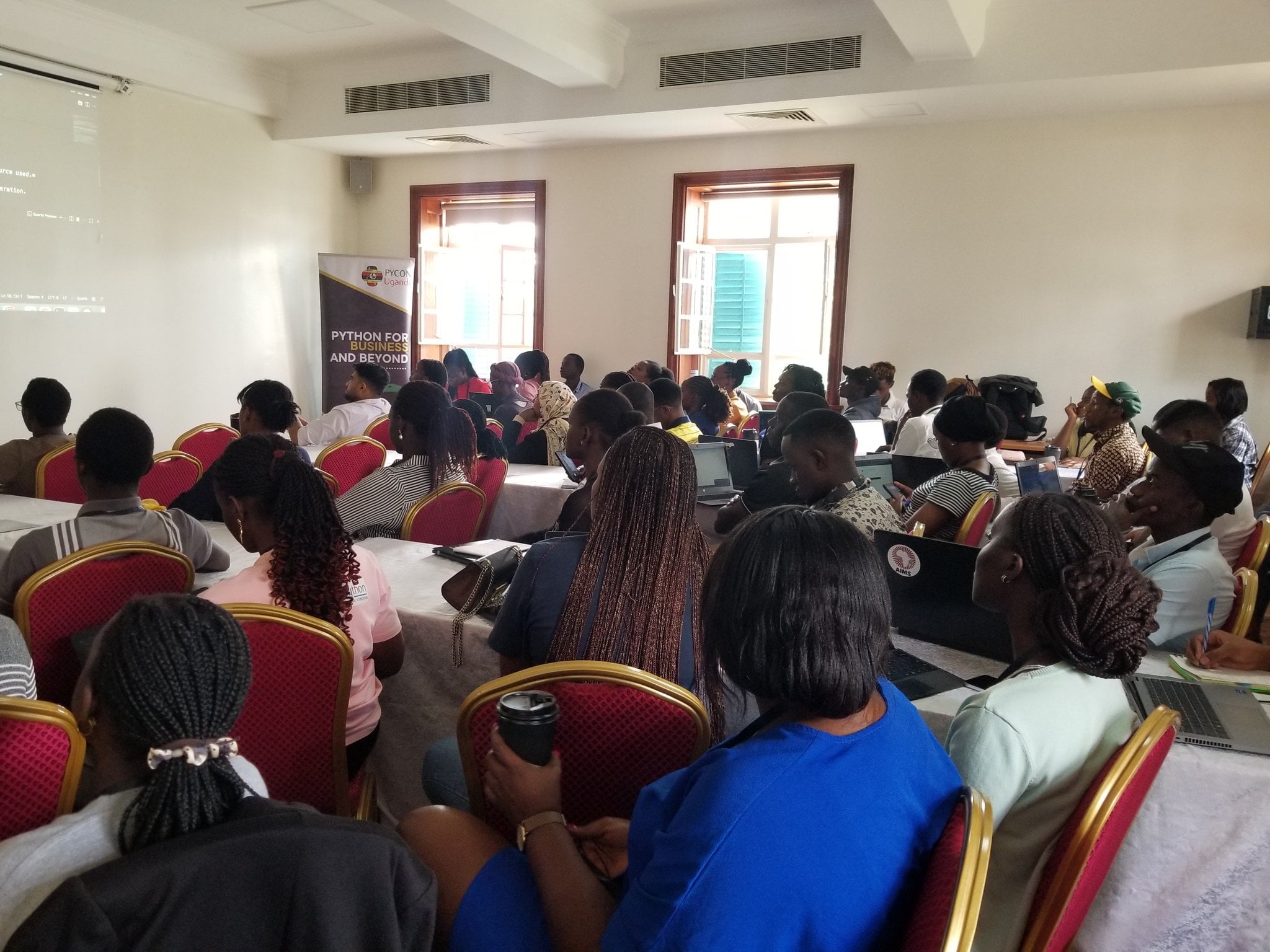
For me, seeing PyCon move to Makerere was particularly interesting because universities play such an important role in growing technical communities.
Students are often the people discovering Python for the first time.
They are experimenting with Django.
Trying data science.
Running their first machine-learning notebook.
Building their first API.
Joining GitHub.
Making their first open-source contribution.
Or simply realising that the people building interesting technology are not as far away from them as they imagined.
By its third edition, PyCon Uganda had become more than a new conference trying to establish itself.
It had become part of Uganda's growing developer-community calendar.
And at the end of that chapter came an even bigger announcement:
Uganda would host PyCon Africa 2026.
And Now, PyCon Africa Is Coming to Kampala 🇺🇬🌍
This year, the scale changes.
From 7–11 October 2026, Speke Resort Munyonyo will host PyCon Africa 2026.
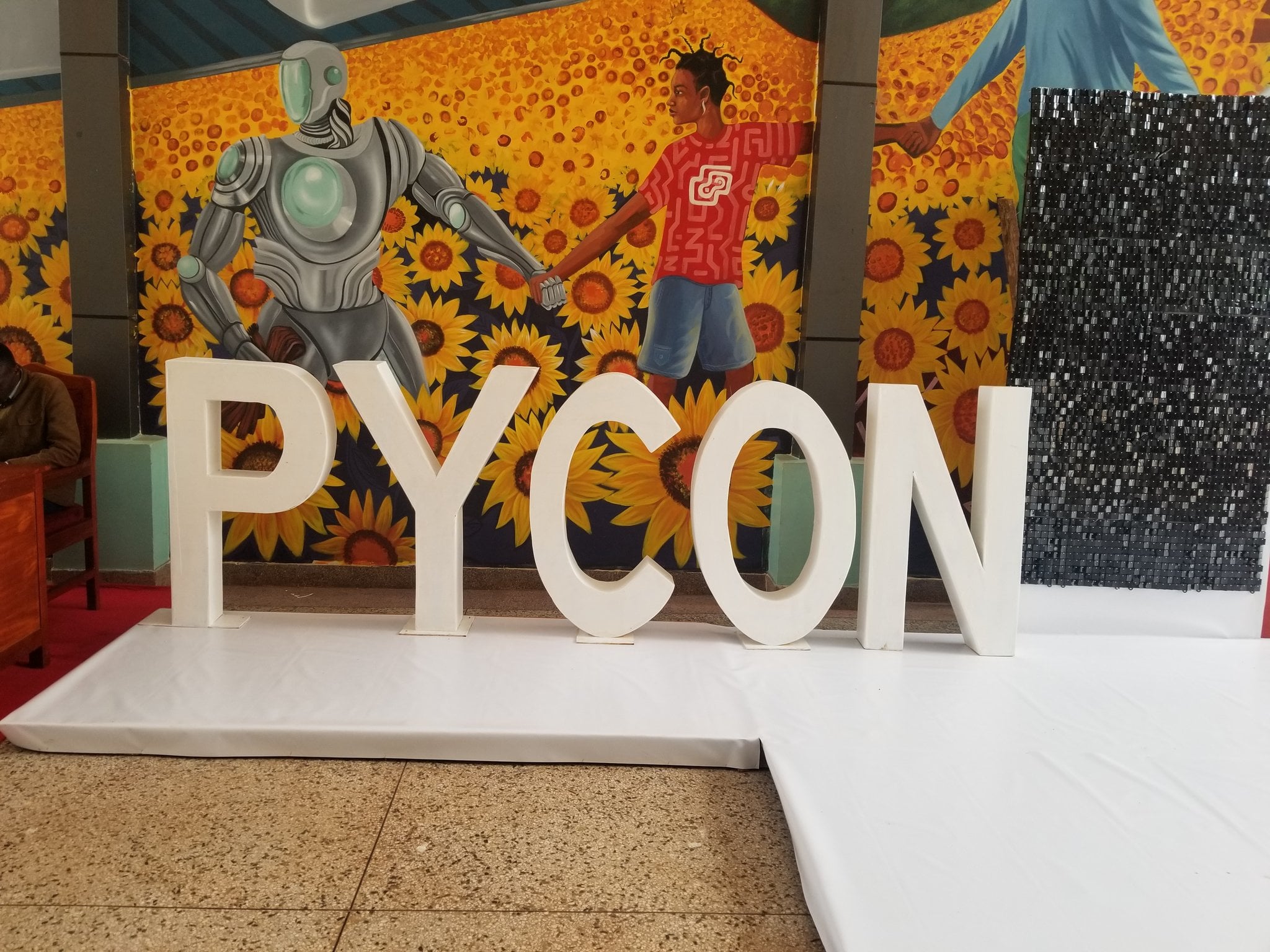
That means developers, researchers, students, open-source contributors, community organisers and technology professionals from Uganda and across the continent will meet in Kampala for five days.
And this is not simply a larger version of a local conference.
It is an opportunity for Uganda's developer ecosystem to connect directly with the broader African Python community.
The event includes collaboration with Python communities from countries including Kenya, Tanzania, Rwanda and South Sudan.
The programme spans workshops, technical talks, community sessions, PyData activities, Women in Data Science, Django Girls, PyLadies Africa, open-source discussions, posters and lightning talks.
There is even a dedicated Python Without Borders programme aimed at refugees and persons of concern.
That breadth is important.
Python today sits at the intersection of so many fields:
Artificial Intelligence
Machine Learning
Data Science
Backend Engineering
Cloud Computing
Cybersecurity
Scientific Computing
Automation
Robotics
IoT
Open Source
Agentic AI
Large Language Models
And the PyCon Africa 2026 schedule reflects that diversity.
A Few Sessions That Caught My Attention
The programme is packed, but a few sessions immediately stood out to me.
Wednesday, 7 October: Workshops and PyData
The conference begins with a strong workshop focus.
There is a session on:
Mapping Data to Visual Properties for Effective Data Visualisation
There is also a workshop around building and deploying an ADK agent on Cloud Run.
Another session explores rapid computer-vision prototyping using FastAI.
The PyData Summit also forms part of the opening day's programme.
For anyone working with data, machine learning or Python-based analytics, there is plenty to explore before the main conference programme even starts.
Thursday, 8 October: AI, Robotics and a Luganda LLM
Thursday has several sessions that particularly interest me.
There is:
Demystifying Robotics & IoT with MicroPython
There is also an LLMs Expert Session.
Another hands-on workshop explores:
Building an AI Agent with Python to Detect Risky Customers
But one of the sessions I am most curious about is:
Building Pearl-Chat: Overcoming the Technical Challenges of Architecting a Native Luganda LLM in Pure JAX
Presented by Wesley Kambale, the session focuses on building a native Luganda language model.
That is the kind of locally relevant AI work I would love to see more of.
There is something powerful about discussing African-language AI systems at a major Python conference happening right here in Kampala.
Friday, 9 October: Python Internals, AI and Agentic Systems
Friday moves into the main conference programme.
There is a session on mechanistic interpretability, an increasingly important area for people trying to understand what happens inside modern AI models.
Another session goes deep into Python performance:
CPython Under Load: NoGIL, Green Threads, AsyncIO vs Other Languages
There is also a talk around:
Serverless GPU Machine-Learning Inference Using Modal and Python
And Friday closes with John Kimani, Google's Developer Ecosystem Lead for Sub-Saharan Africa, speaking on:
Building the Agentic Future with Google Antigravity
With how quickly AI agents are becoming part of software development, this should be an interesting conversation.
Saturday, 10 October: Production AI, FastAPI and Open Source
Saturday opens with Chris Orwa presenting:
Building AI-Powered Lending Infrastructure
The day also includes sessions around:
Real-time voice agents in Python
FastMCP server security
Scaling FastAPI and Flask applications
Event-driven systems
Production Async Python
MicroPython
There is also an:
Open Source, Research and Industry Panel
That intersection is particularly important.
We often talk about research, industry and open source as separate worlds.
In practice, some of the most interesting innovation happens when they overlap.
Sunday, 11 October: Multi-Agent Systems, African AI and Python's Creator
Sunday has some equally interesting sessions.
Jade Abbot opens with:
A Decade of Language AI: A Reflection on the Insanity
That title alone deserves attendance. 😄
There is also a session on:
From Single Agents to Production Teams: Building Multi-Agent Systems with Python, MCP, and Persistent Memory
That one should be especially interesting for anyone following the growth of MCP and agentic AI systems.
Other sessions explore:
Python-first AI programmes for African universities
Controlling Kubernetes through Telegram voice notes
Voice-cloning speech synthesis
Modern AI infrastructure
And then the conference closes with someone rather important to the story of Python itself.
Yes, Guido van Rossum Is Speaking
Guido van Rossum, the creator of Python, is officially part of the PyCon Africa 2026 programme.
His closing keynote is titled:
The Evolution of Python: Lessons from Its Creator
There is one important distinction.
The official schedule currently lists Guido's keynote as a remote session.
So Guido is confirmed to be speaking at PyCon Africa 2026, but he is not currently listed as physically travelling to Kampala.
Even remotely, that is a pretty remarkable way to close the conference.
Python was first released more than three decades ago.
Today, the language is deeply embedded in artificial intelligence, data science, scientific computing, automation, cloud infrastructure, web development and education.
And in October, the African Python community gets to hear directly from the person who started it.
Not bad for a Sunday afternoon in Kampala. 🐍
This Year, I Am Watching From a Different Position
There is also an important distinction in my own relationship with this year's conference.
I am not officially part of the PyCon Africa 2026 core organising team.
My formal organising role belongs to that first PyCon Uganda chapter in 2023.
This time, I am watching as a community member, supporter and very enthusiastic well-wisher of what the current organising team is building.
And I actually think that makes the journey interesting in a different way.
There is something satisfying about helping with the early stages of a community initiative and then seeing other people take it forward.
New organisers bring new ideas.
New volunteers introduce new energy.
Different people take responsibility.
The event evolves.
The community becomes larger than the individuals who started it.
That is how healthy communities should work.
The real success of a community initiative is not whether the same people remain at the centre forever.
It is whether the community can continue to grow without depending on them.
From a Local Conference to a Continental Gathering
When I look back at that 2023 photograph now, this is what stands out to me.
Behind our random poses was a community that was only beginning to see what it could become.
Since then, PyCon Uganda has continued through:
2023 — National ICT Innovation Hub, Nakawa
2024 — NWSC International Resource Center, Bugolobi
2025 — Makerere University Ivory Tower
And now:
2026 — PyCon Africa at Speke Resort Munyonyo
That is quite a journey in four years.
What began as Uganda hosting its first dedicated PyCon is now connecting into a continental gathering.
And that is the part of the story worth celebrating.
Now, About That PyCon Gang Photo… 📸
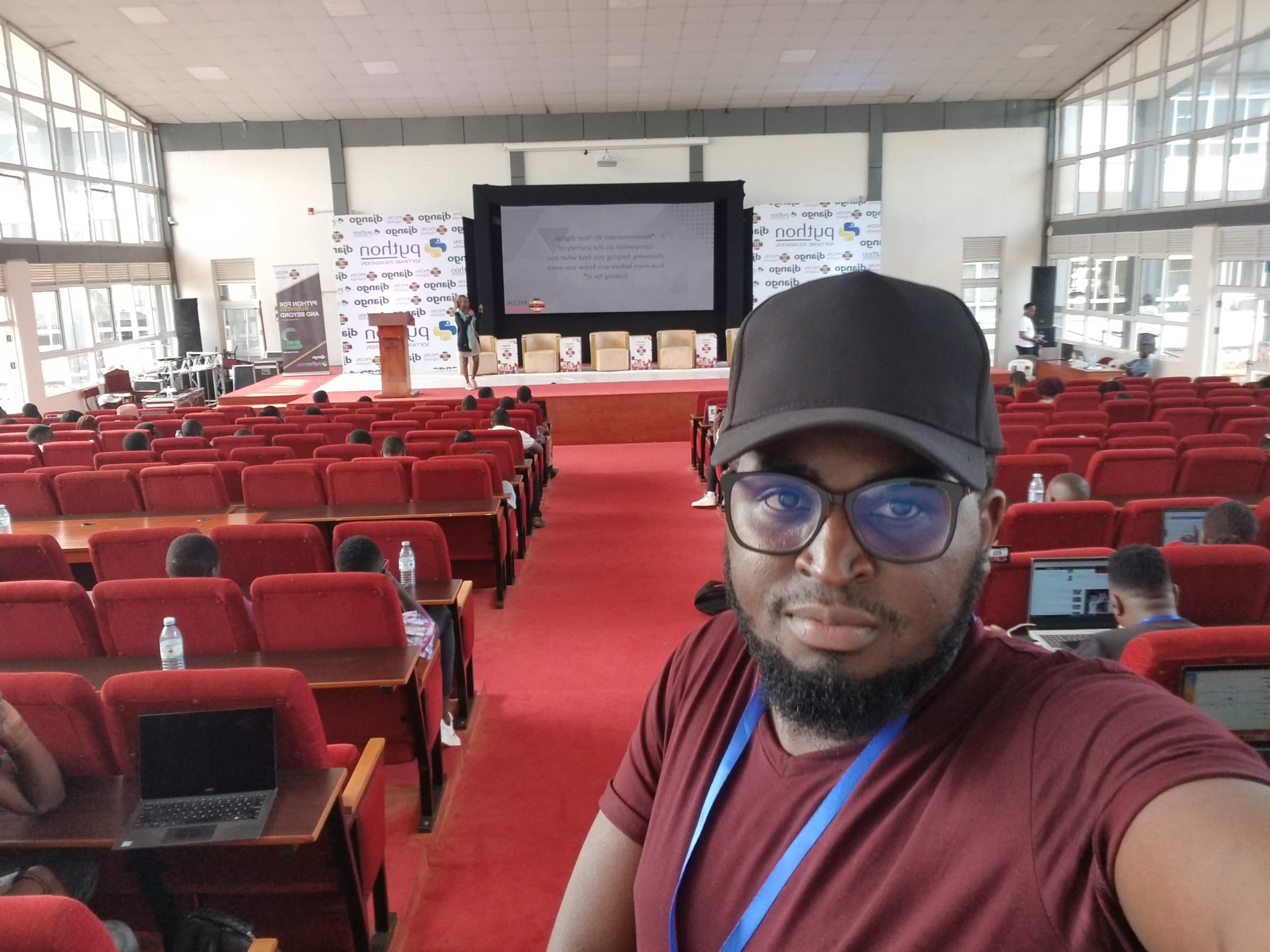
Of course, this whole reflection still started with one photograph. This one here...
So I think we should make something fun out of it.
If you attended PyCon Uganda in 2023, 2024 or 2025, go back through your gallery.
Keep scrolling.
Yes, further back. 😂
Find your PyCon gang.
Find that slightly chaotic conference photo.
Find the person you met for the first time at PyCon and somehow kept meeting at every technology event afterwards.
Then bring that photo to PyCon Africa 2026.
And recreate it.
Same gang if possible.
Same pose if possible.
Same energy.
Bonus points if someone can still find the same T-shirt. 😂
Then put the two photographs side by side.
Then vs. now.
Maybe someone was a student in 2023 and is now an engineer.
Maybe someone has become a conference speaker.
Maybe another person started contributing to open source.
Maybe someone founded a startup.
Maybe someone went into research.
Maybe the gang became bigger.
Those stories matter too.
Sometimes the impact of a developer community is not best measured through conference programmes.
Sometimes it is measured through what happens to the people who keep showing up.
And If This Will Be Your First PyCon…
Then your assignment is even easier.
Take the first photo.
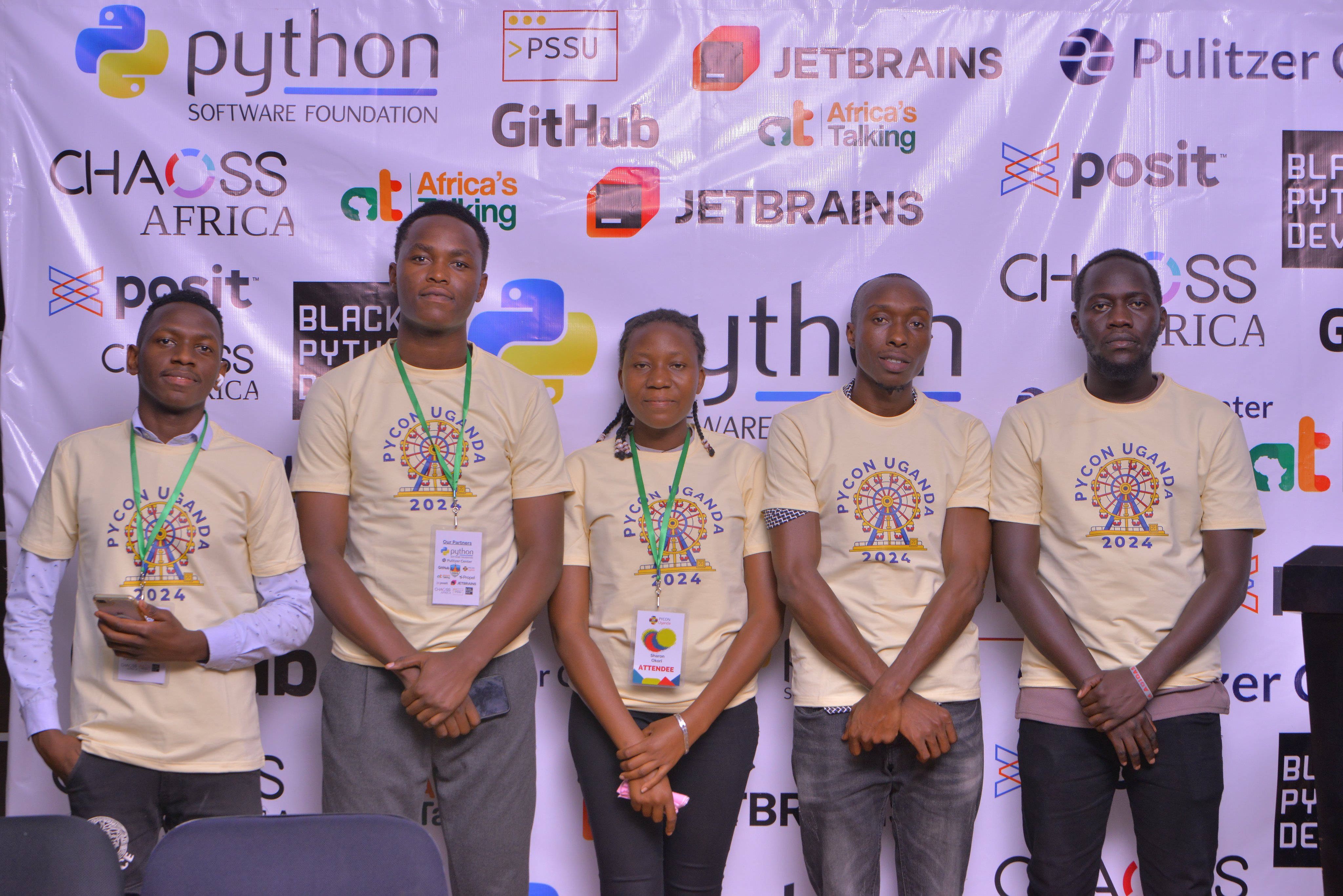
Find your people.
Introduce yourself to the person sitting next to you.
Ask the speaker the question you were afraid to ask.
Attend the workshop that sounds slightly above your current level.
Visit the community booths.
Talk to open-source contributors.
Join conversations.
Take too many photos.
Because three years later, one of those random conference pictures might mean much more than you expected.
Mine certainly does.
Kampala, It Is Almost Time 🇺🇬
From Nakawa.
To Bugolobi.
To Makerere.
And now to Munyonyo.
Uganda's Python community has travelled a pretty interesting road over the past few years.
The next chapter is almost here.
PyCon Africa 2026
📍 Speke Resort Munyonyo, Kampala, Uganda
📅 7–11 October 2026
🐍 Five days of Python, AI, data, open source and community
Come for the Python.
Come for the AI.
Come for the open source.
Come for the conversations.
Come for the people.
And do not forget your PyCon gang.
We have a photo to recreate. 📸🐍🌍
References
Tags: python pycon opensource artificial-intelligence uganda