From Rejection to Captain: How One AWS Cloud Club Grew Into a Student Builder Movement in Uganda
In 2024, I applied to become an AWS Cloud Club Captain now AWS Student Builder Group Leader.
I was rejected.

There was nothing particularly dramatic about it. I had applied for an opportunity I wanted, I wasn't selected, and I had to decide whether that was the end of the story.
It wasn't.
I kept organizing developer communities, building projects, learning, speaking, volunteering and creating opportunities for other students.
Then applications opened again in 2025.
I applied again.
This time, I got in.
I became the first AWS Cloud Club Captain in Uganda, leading the AWS Cloud Club at Makerere University.
At the time, I thought the big milestone was simply getting accepted.
Looking back now, that was only the beginning.
Because the part of this story I am most proud of is not that Uganda eventually had its first AWS Cloud Club Captain.
It is that today, there are 13+ AWS Student Builder Group Leaders across Ugandan universities, with more students, more communities, more meetups and more people taking up the responsibility of building the ecosystem.
That is what growth looks like.
Why cloud?
My interest in cloud computing started before the title.
Like many developers, I first encountered cloud through practical questions.
Where do I deploy an application after building it locally?
Where does the data live?
How do users authenticate?
How do services communicate?
How do you monitor infrastructure?
How do you move from something running on your laptop to something other people can actually use..
As I became more involved in software development, AI, machine learning, data engineering, research and startups, cloud infrastructure kept appearing.
But another question became just as important to me:
How do we make these technologies more accessible to students?
Many university students hear terms such as EC2, S3, IAM, Lambda, serverless, containers and VPCs long before they get the opportunity to actually work with them.
I wanted to help reduce that gap.
That was one of the reasons I first applied to become an AWS Cloud Club Captain.
The rejection was in 2024
When I was rejected in 2024, I could easily have decided that the program simply was not for me.
Instead, I kept doing the work I believed mattered.
I continued building communities.
I continued organizing technical events.
I continued learning.
I continued helping other students find opportunities.
And when the opportunity came around again, I tried one more time.
The second application was successful.

Becoming Uganda's first AWS Cloud Club Captain
In 2025, I joined a global cohort of AWS Cloud Club Captains from around the world.
One of our first experiences was an onboarding session with 100+ Captains globally, supported by people including Nayoung Miller Won and Tracy Wang from AWS.
That meeting changed the scale of what I was thinking about.
We were not simply creating another campus technology club.
We were becoming part of a global network of students building technical communities at universities around the world.
For me, the question became:
What should this look like in Uganda?
And more specifically:
What should an AWS Cloud Club at Makerere actually do for students?
I did not want it to exist only as a logo, a LinkedIn page or a WhatsApp group.
The goal was to create a community where a student could come in knowing very little about cloud computing, learn the fundamentals, meet practitioners, build something, explore certifications and eventually help another person learn.
Building the first team
No serious community is built by one person.
We therefore built a core team around AWS Cloud Club Makerere.
That team included people such as Shakiran Nannyombi, my co-captain, together with Modest Nakiroya, Akanga Andrew, Bronia Boonabaana, Shamma Tendo, Tugume Keith, Asasira Arthur and Twesige Trejan.
We were also fortunate to have Dr. Michael Kizito, Senior Lecturer at Makerere University, as our club mentor.
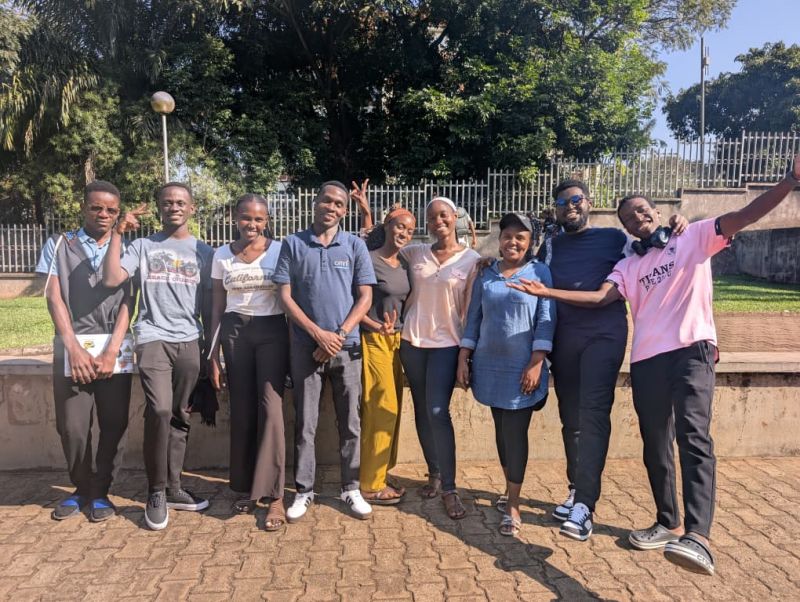
From AWS, we received support and guidance from Nayoung Miller Won, Tracy Wang, the AWS Cloud Clubs program and the wider AWS Developers ecosystem.
I may have been called the Captain, but building the community was always a team effort.
Launching AWS Cloud Club Makerere
We officially launched the club virtually on September 13, 2025.
We wanted students to immediately understand that the AWS community was much bigger than Makerere.

Our launch brought together community leaders from Uganda and beyond, including Adeline Makokha, AWS Hero from Kenya; Isaac Kisakye, from the AWS User Group Kampala community; Aayusha Adhikari, an AWS Cloud Club Captain from Nepal; and our mentor, Dr. Michael Kizito.
The session was moderated by Shakiran Nannyombi.
By then, the community had already grown to 90+ members.
A year earlier, I had received a rejection.
Now we had a real student AWS community taking shape in Uganda.
The harder part came after the launch
Launching is the easy part.
Building something that continues to matter is harder.
We kept organizing.
We hosted technical learning sessions.
We connected students to practitioners.
We introduced students to AWS services and learning pathways.
We encouraged people to build.
We talked about certifications.
We created spaces where students could ask questions without needing to already be experts.
Over time, the Makerere community grew to 198+ members on Meetup, and we organized more than five AWS-focused events.
I also progressed to Gold AWS Cloud Club Captain status during the original Cloud Clubs era.
/
But the numbers I remember most are not simply the membership totals.
It was the change in the questions students were asking.
The conversation moved from:
What is AWS?
to:
How do I deploy this?
Which service should I use?
How do I prepare for a certification?
and eventually:
How do I start one of these communities at my own university?
That last question mattered most.
Because from the beginning, Makerere was never supposed to be the only one.
From Cloud Clubs to Student Builder Groups
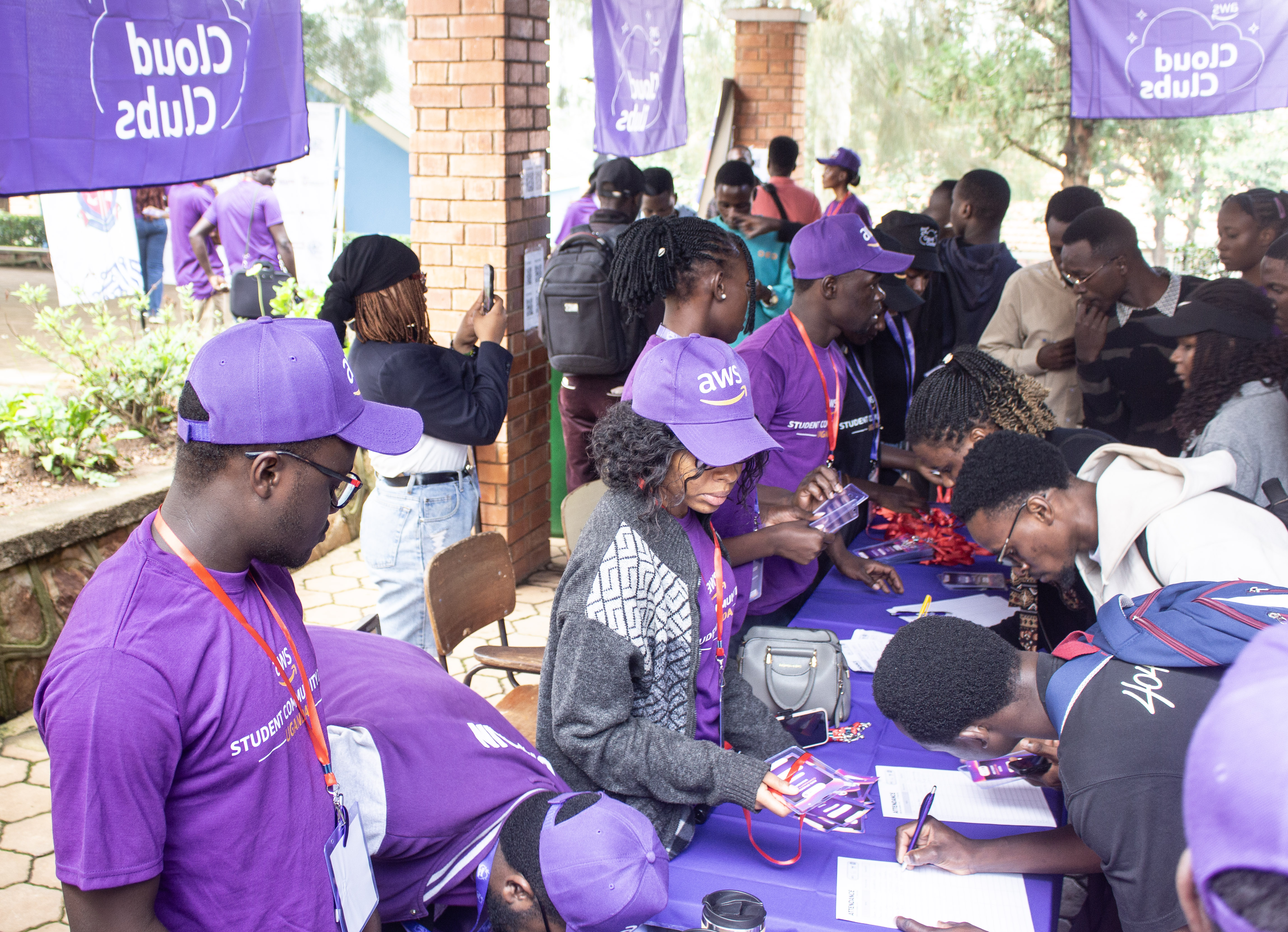
The program itself later evolved.
AWS Cloud Clubs became AWS Student Builder Groups, and the leadership role changed from AWS Cloud Club Captain to AWS Student Builder Group Leader.
The name changed, but the core mission remained familiar:
Students helping other students learn, build and grow with cloud and emerging technologies.
In a way, the new name reflects what I always liked most about the program.
Builders.
Not simply people attending events.
Not people collecting titles.
Students actually learning, creating, experimenting and helping one another.
And Uganda kept growing
This is the part of the journey that means the most to me.
When I became the first AWS Cloud Club Captain in Uganda, there was one.
Today, the story is very different.
We now have 13+ AWS Student Builder Group Leaders across Ugandan institutions, each with the opportunity to build a community on their campus.
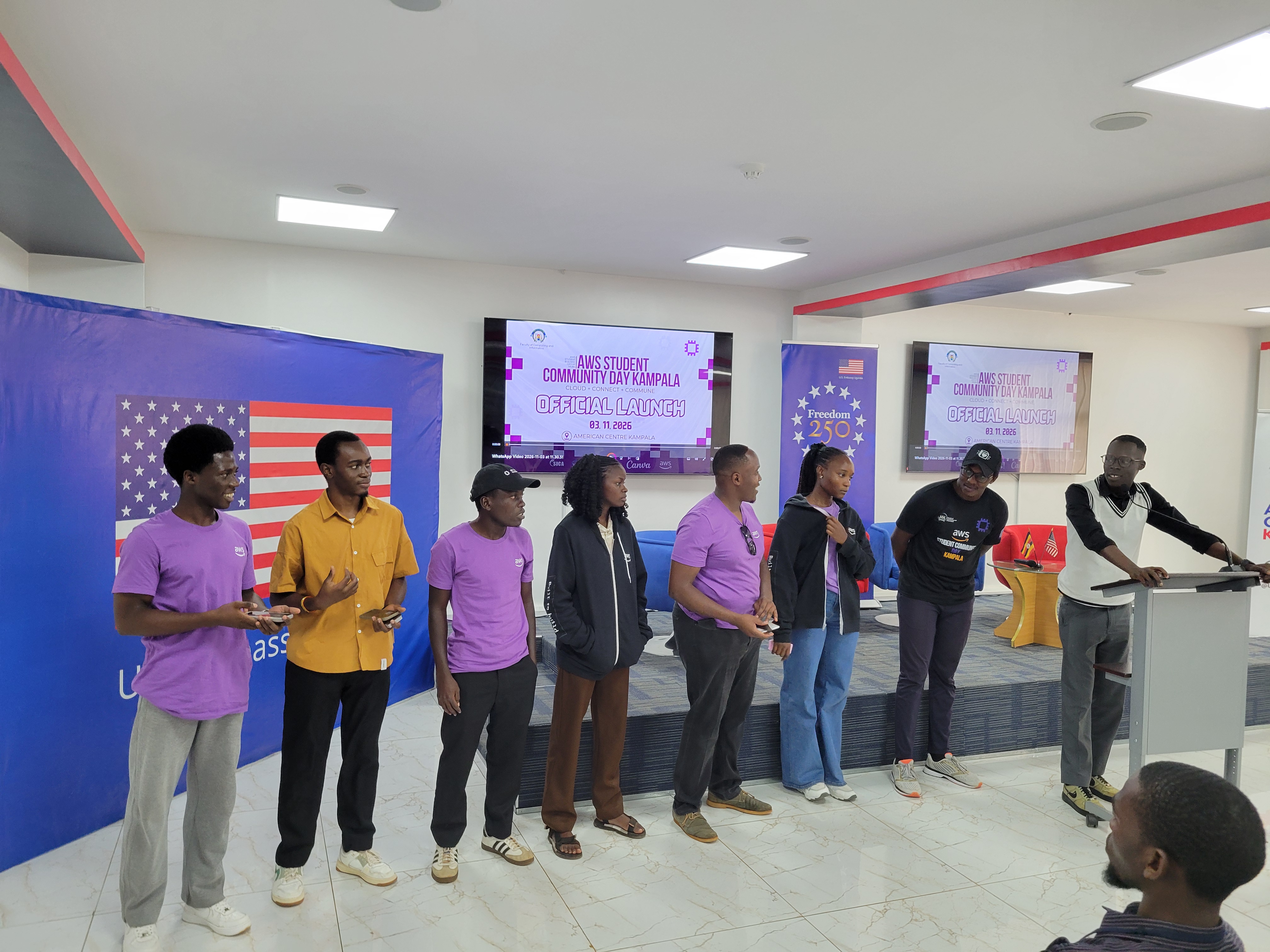
The current leaders include:
- Byaruhanga Daniel — Kampala International University
- Niwasiima Ashelycole — Cavendish University Uganda
- Mubiru Elton Felix — Mbarara University of Science and Technology
- Robert Wanyama — Uganda Christian University
- Ainemukama John Rockey — Kabale University
- Kafeero Mirembe Mercy — Victoria University Kampala
- Oscar Luyimbazi — Mountains of the Moon University
- Nannyombi Shakiran — Makerere University
- Benjamin Wakida — Makerere University Business School
- Kamwanga Rahiim — UTAMU, Kungu
- Katuluba Paul — Uganda Institute of Information and Communications Technology
- Godwin Ofwono — Uganda Technology and Management University
- Jey Daniel Awany — Makerere University Business School
And I expect that list to keep growing.
That is a very different picture from where we started.
More universities.
More student leaders.
More students entering the AWS ecosystem.
More meetups.
More technical sessions.
More people willing to organize.
More students realizing that they do not have to wait until graduation before they begin building meaningful technical communities.
The pursuit is no longer being carried by one Captain or one university.
It has become a network.
Taking the story beyond campus
One milestone I particularly enjoyed was representing AWS Cloud Clubs at DataFest Africa 2025.
My session was titled:
The Builder's Playbook: Engineering Impact Through Community and Code
I framed the session around three things I believe matter when building technology ecosystems:
Community. Code. Collaboration.
Participants also took part in a short ideathon where they identified a problem, proposed a solution and sketched the AWS architecture they could use to build it.
That experience reinforced something I had already started seeing through the Cloud Club:
Cloud computing becomes much more interesting when students stop seeing AWS services as definitions to memorize and start seeing them as building blocks.
The first AWS Student Community Day in Uganda
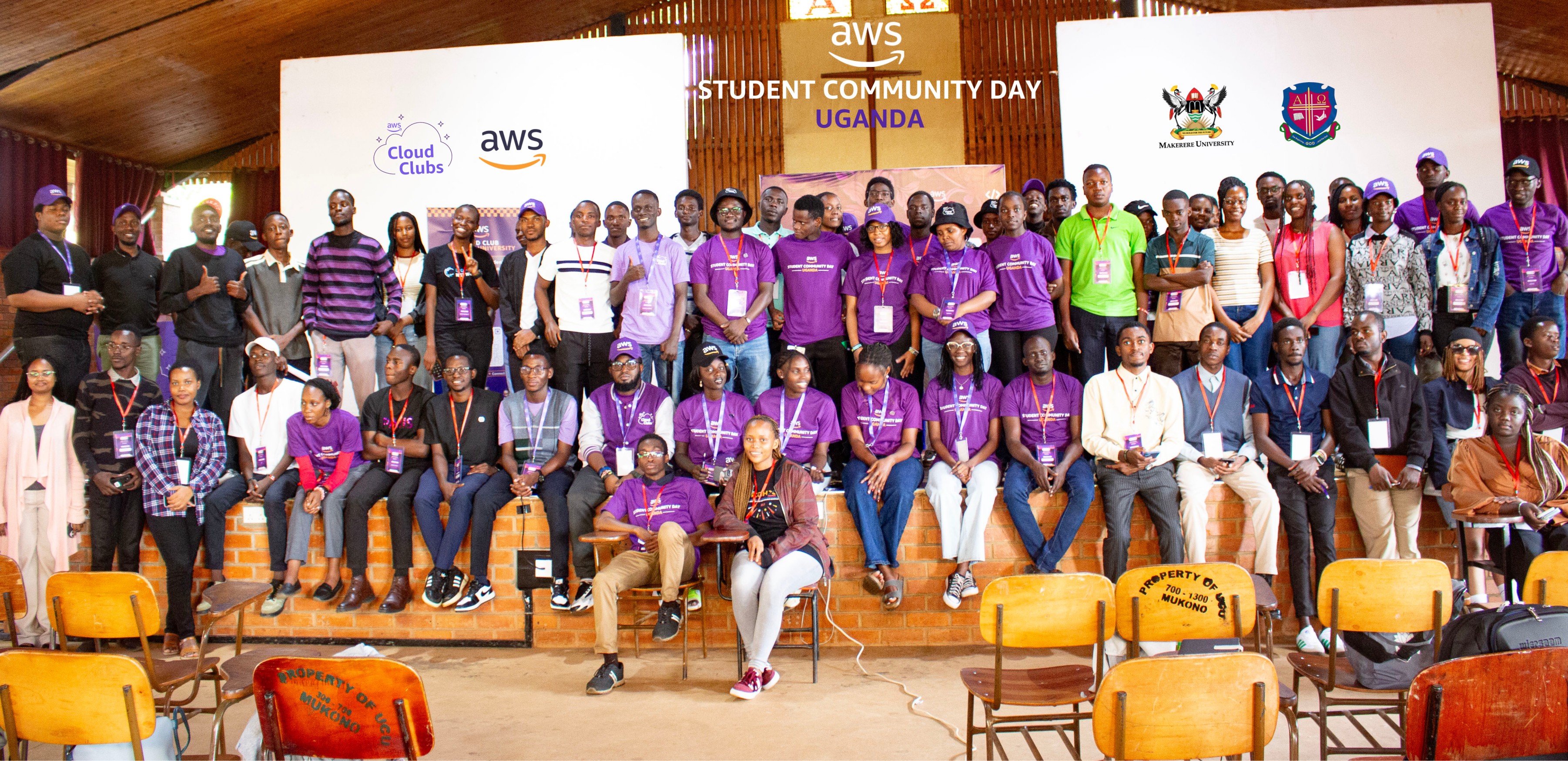
The biggest milestone from the journey came in 2026.
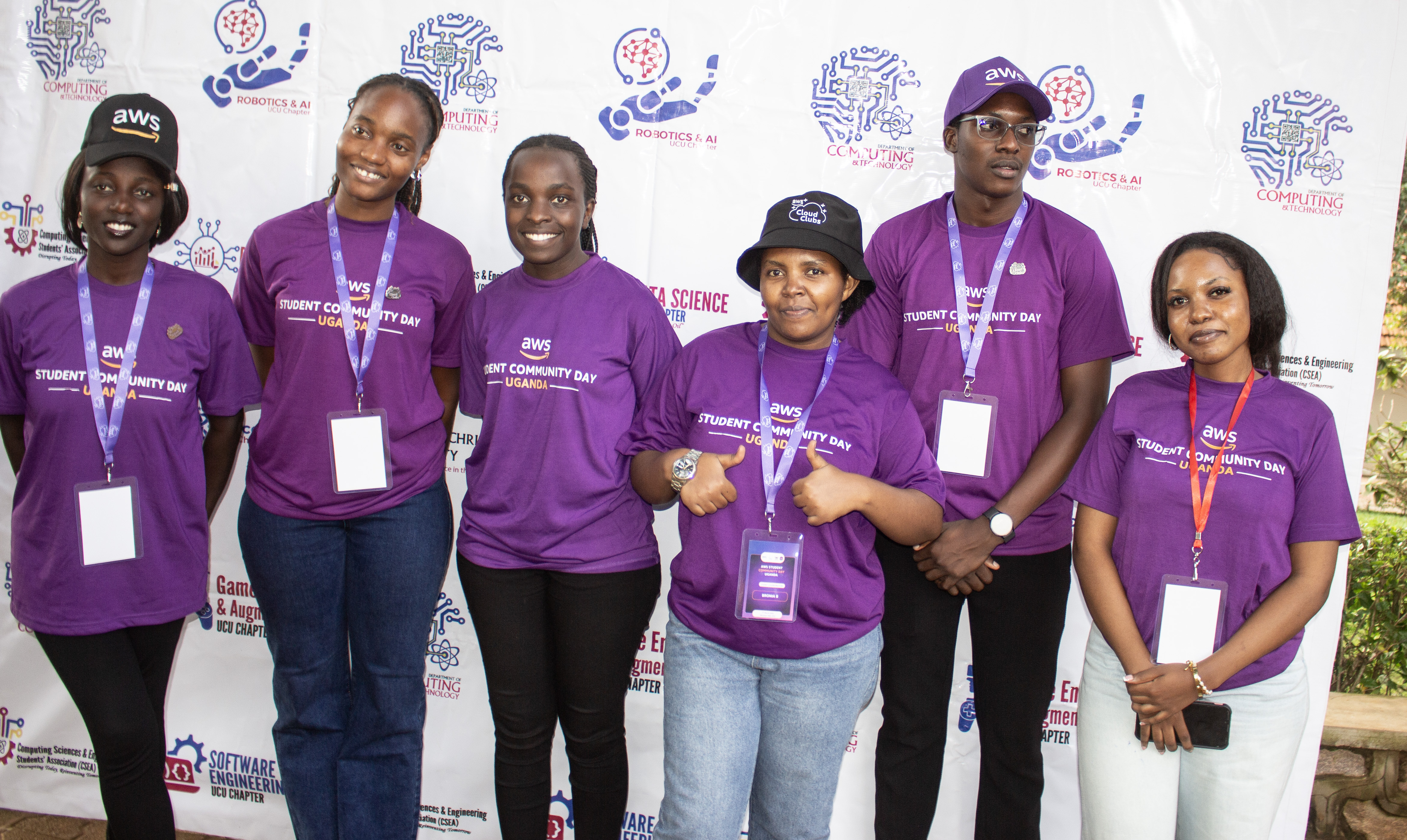
On March 7, 2026, we hosted the first AWS Student Community Day in Uganda at Uganda Christian University.
More than 160 students from eight universities attended.
The event brought together student builders, AWS community leaders, industry practitioners, faculty mentors and volunteers under the theme:
Raising the Next Generation of Cloud Leaders on Campus
We had technical sessions, practical learning, networking and conversations around AWS fundamentals, VPC, IAM, Kiro, DevOps, cloud careers and architecture.
There were also activities such as Networking Bingo and an AWS Quizzathon.
What made the event important to me was not simply the attendance.
It was evidence of the ecosystem becoming connected.
The Makerere team worked with students and organizers from UCU and other institutions.
The AWS User Group Kampala community supported the initiative.
Industry practitioners gave their time.
Faculty mentors showed up.
AWS supported us.
Students travelled from different universities to learn together.
What had started with one campus community was beginning to look much more national.
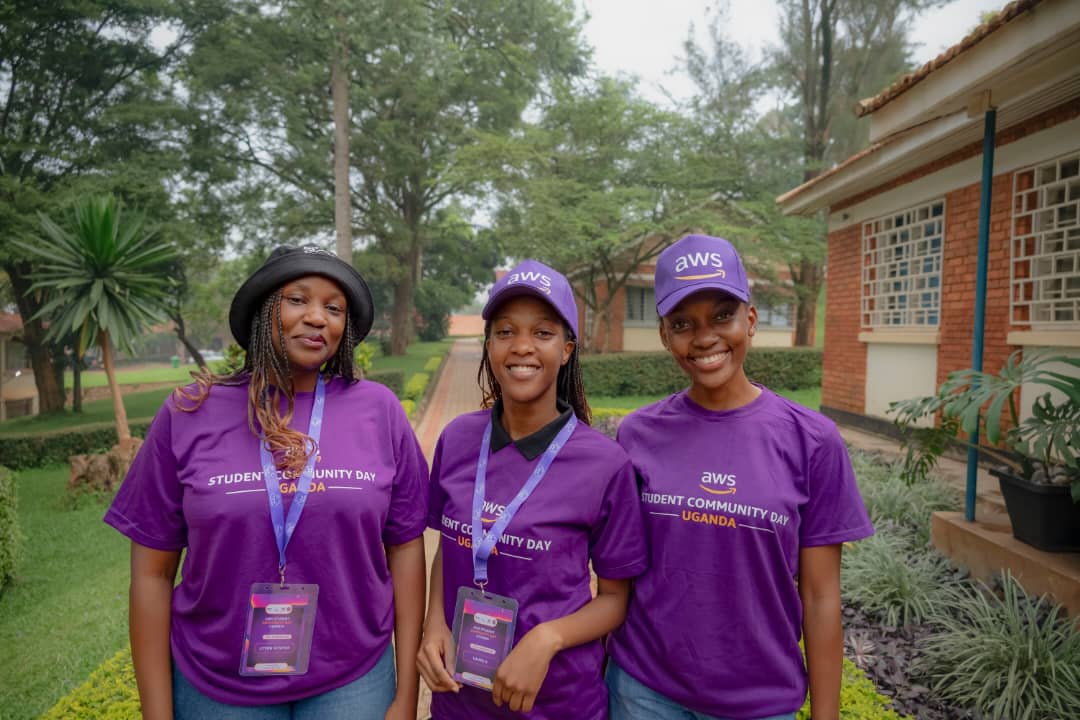
We documented what we learned
After Student Community Day, I wanted to document more than the pictures.
I wrote an article on AWS Builder Center titled:
How We Launched the First AWS Student Community Day in Uganda
The intention was not simply to celebrate the event.
I wanted another student leader somewhere else to be able to understand what it took to organize one, what worked, what did not and what we learned along the way.
That article became a practical playbook for other community builders.
And that is another thing technical communities can do well:
We do not have to repeat every mistake from scratch.
Someone can build on what the previous person learned.
Looking back at the rejection
I still think about that first rejection sometimes.
If I had treated the 2024 response as a final answer, this particular journey might have ended there.
There would have been no second application.
No Makerere AWS Cloud Club under my captainship.
No journey to Gold Captain.
No DataFest representation through this community.
And perhaps no role for me in helping kick-start what became a much wider AWS student-builder movement across Uganda.
That does not mean every rejection becomes an acceptance.
It doesn't.
Sometimes the timing is wrong.
Sometimes you need to improve.
Sometimes somebody else is simply the better candidate.
The lesson I took from mine was simpler:
Do not wait for a title before doing the work.
If you want to lead communities, start contributing to one.
If you want to teach, share what you know.
If you want to become better technically, build.
If you want opportunities to exist for students around you, help create them.
The title can come later.
Being first was never the real goal

I am proud that I became Uganda's first AWS Cloud Club Captain.
But today, I am much more excited about the fact that I am no longer alone.
There are now 13+ Student Builder Group Leaders carrying this work into universities across Uganda.
That is what I hoped would happen.
The goal was never for Makerere to remain the centre of everything.
The goal was never to hold onto the label of "first."
The goal was to help prove that this could work here, then see other people take it further.
Every new leader creates another entry point for a student.
Every new group creates another campus where somebody can discover cloud, AI or software engineering.
Every meetup creates another chance for someone to meet a mentor, build their first cloud project, hear about an opportunity, prepare for a certification or decide that they too can lead.
That is how technical ecosystems grow.
Not because one person does everything.
But because more people decide to participate.
I was fortunate to be the first AWS Cloud Club Captain in Uganda.
Today, I am far more proud that there are many more leaders after me.
And I hope that a few years from now, a list of thirteen will look small.
About the author
My name is Ronnie & a fellow geek like you😎. I am passionately tech curious.
I blog, tweet, write, code, vlog, discuss and eat anything about tech.
😍 Feel Free To Connect 😍
Comments
Join the discussionNo comments yet. Be the first to comment.