# How The Internet Works In Just 10 Lines!
Hello, fellow tech-nerd & first-time visitor👋. You are reading this article because of the Internet and you might have already had an idea or already know what happens behind the scenes.
🎈 Scroll To Skip Intro:
Well, many people struggle to explain how this beautiful abstraction of processes makes up this global connection that makes the world a global village.
#### What is the Internet?
The internet is a globally connected network system facilitating worldwide communication and access to data resources through a vast collection of private, public, business, academic and government networks.

It is governed by agencies like the [Internet Assigned Numbers Authority](https://iana.org/) or (IANA) that establish universal protocols and no one owns it!
#### Brief History Of The Internet ⏱:

The internet originated with the U.S. government, which began building a computer network in the 1960s known as [ARPANET](https://en.wikipedia.org/wiki/ARPANET) which was to help researchers and universities share resources.
➰ Read More [Here](https://www.techopedia.com/definition/2419/internet) :
#### The Stats 📈:
As of January 2021, there were 4.66 billion active internet users worldwide - 59.5 per cent of the global population. Of this total, 92.6 per cent (4.32 billion) accessed the internet via mobile devices.
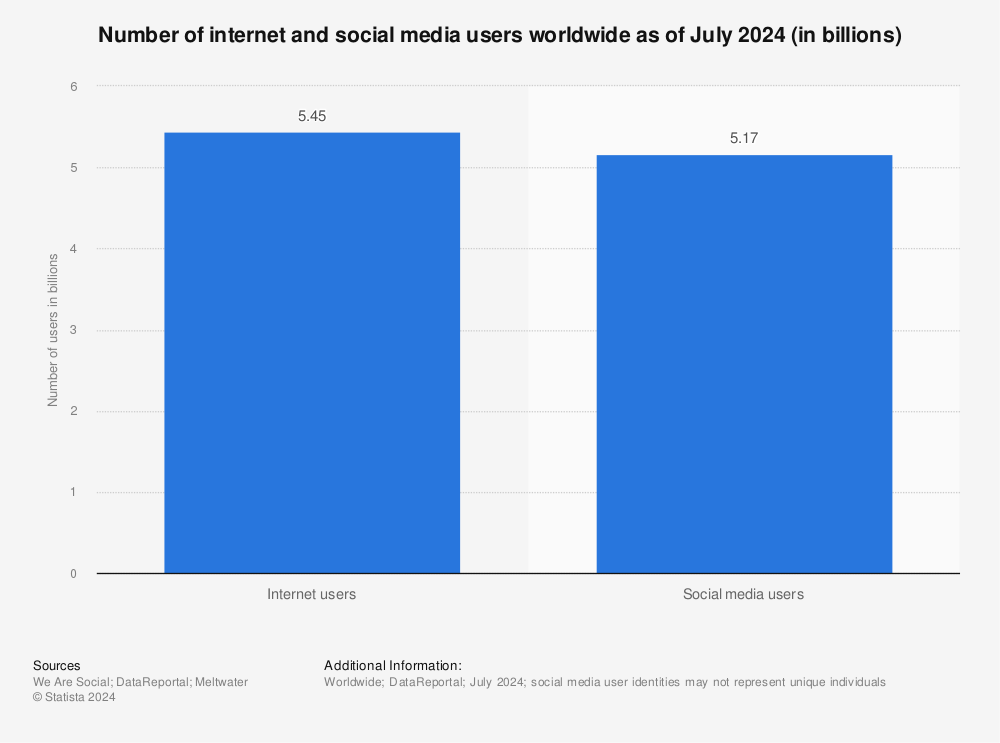
➰ Find more statistics at Statista
In my country (Uganda), there were around 4% of the population used the internet in 2007 and that number has increased 10 times and over 40% of Ugandans are now netizens!
#### How The Internet Works In Just 10 Lines!

I will begin with what happens when you type in a web address into your browser.....
``` Step 1: ```
Your PC or device is connected to the web through a modem or router. Together, these devices allow you to connect to other networks around the globe.
``` Step 2: ```
Your router enables multiple computers to join the same network while a modem connects to your ISP (Internet Service Provider) which provides you with either cable or DSL internet.
``` Step 3: ```
Type in a web address, known as a URL (Uniform Resource Locator). Each website has its own unique URL that signals to your ISP where you want to go.
``` Step 4: ```
Your query is pushed to your ISP which connects to several servers which store and send data like a NAP Server (Network Access Protection) and a DNS (Domain Name Server).
``` Step 5: ```
Next, your browser looks up the IP address for the domain name you typed into your search engine through DNS. DNS then translates the text-based domain name you type into the browser into the number-based IP address.
Example:
```
Google.com becomes 64.233.191.255
```
The Domain Name System (DNS) is the phonebook of the Internet.
Every device, node or computer connected to the internet has an IP address.
``` Step 6: ```
Your browser sends a Hypertext Transfer Protocol (HTTP) request to the target server to send a copy of the website to the client using TCP/IP.
HTTP is a protocol for fetching resources such as HTML documents. It is the foundation of any data exchange on the Web and it is a client-server protocol.

*Image Tip: Toggle Light Mode from up to see images clearly in this blog. *😜
TCP/IP stands for Transmission Control Protocol/Internet Protocol and is a suite of communication protocols used to interconnect network devices on the internet.
``` Step 7: ```
The server then approves the request and sends a “200 OK” message to your computer. Then, the server sends website files to the browser in the form of data packets.
``` 200``` is an HTTP response status code and means success.
➰ Read more [here](https://developer.mozilla.org/en-US/docs/Web/HTTP/Status) .
``` Step 8: ```
At a client/server model, the browser is the client run on a computer that contacts the Web server and requests information.
``` Step 9: ```
As your browser reassembles the data packets, the website loads allowing you to learn, shop, browse, engage and read my article😋.
➰ Read how browsers work [here](https://medium.com/@monica1109/how-does-web-browsers-work-c95ad628a509).
``` Step 10: ```
Enjoy your search results!
My question to you now is; can you explain the Internet to a 5-year-old in under 5 minutes?
#### Summary
Simply put, the Internet works by allowing computers to "talk" and share information.

One computer asks another computer for information. Information requested; information delivered.
The two computers talk back and forth. It is still very much like a conversation but under the hood, they could be millions of other computers connected!
```Notes```:
📌 [HP](https://www.hp.com/us-en/shop/tech-takes/how-does-the-internet-work)
📌 [Turbo Future](https://turbofuture.com/internet/how-does-internet-work-how-internet-works)
📌 [Quora](https://www.quora.com/What-is-the-history-of-the-Internet)
If you enjoyed reading, consider subscribing and reacting to this with love by sharing, commenting and any criticism is much welcome.
🔹Follow me on [Twitter](https://twitter.com/AfroBoyUg) :
**Ronnie Atuhaire 🤓**